

Back in 2010, celebrity chef Jamie Oliver shocked the world when he held up a tomato to a class of six-year-olds and asked them what it was. The answer, shouted confidently from the back of the room, was: “Potato!” That moment became a symbol of how far children had drifted from understanding where their food really comes from.
A 2014 Sydney Morning Herald article confirmed this wasn’t just a funny anecdote — it was a worrying trend. Surveys showed that many Australian children struggled to identify common fruit and vegetables, with some believing bananas grew underground and cotton came from animals. British studies revealed similar confusion, with a quarter of children convinced fish fingers came from pigs.
Fast forward more than a decade, and the problem hasn’t gone away. In fact, it has deepened. A 2021 Woolworths survey reported by KidsNews found that 55 per cent of Australian children aged six to 14 had never set foot on a farm. Even more concerning, food knowledge had declined 16 per cent in just seven years. Many children could no longer identify vegetables like beetroot and leek, and more than half admitted they had little understanding of how food gets from paddock to plate.
Experts say the reason is simple: urbanisation. As families moved away from farming regions, fewer children had relatives on the land. Gone are school holiday visits to the family farm, replaced by shopping trips to supermarkets where food appears wrapped in plastic, divorced from the soil, sun, and labour that produced it. The result is a generation disconnected from one of life’s most essential systems — the food system.
This disconnect matters. Research shows that children who understand where their food comes from are more likely to make healthier choices, appreciate the environment, and recognise the importance of sustainability. Without that knowledge, they are more vulnerable to processed diets, less likely to care about farming practices, and ill-equipped to tackle future environmental challenges.
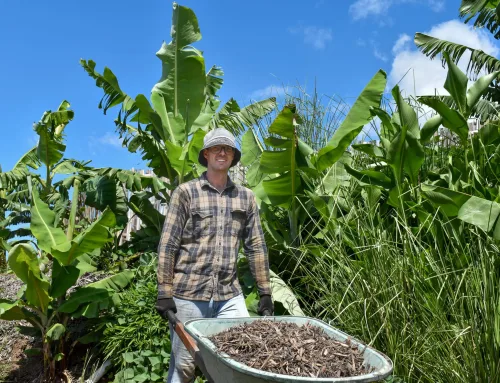
That’s where Green Connect, a nonprofit social enterprise in Warrawong, is stepping in. On its 11-acre organic farm, Green Connect grows fruit, vegetables, herbs, and flowers without synthetic chemicals. Every week, local families receive fresh produce through veg box subscriptions. But Green Connect’s mission goes beyond feeding people — it’s about reconnecting people, especially children, with food and the land.
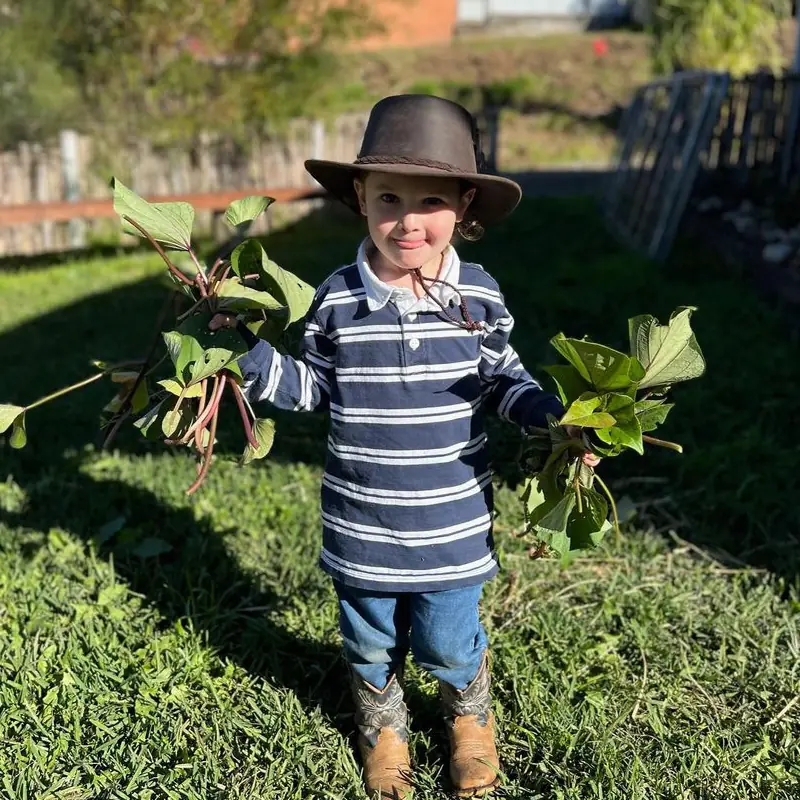
Through excursions, Farm Kindy, and Play & Picnic days, children across the Illawarra step into a working farm. They see carrots pulled from the ground, collect eggs straight from the coop, and learn what it takes to care for plants and animals. For many, it’s their first time on a farm — directly addressing the gap highlighted in the KidsNews survey. These hands-on experiences turn abstract classroom lessons into lasting memories.
When kids visit the farm, they’re not just learning about food production. They’re discovering the joy of being outdoors, the patience required to grow something, and the respect needed for animals and the environment. That’s the kind of education you can’t get from a textbook.
Green Connect’s work is also about inclusion. The farm provides jobs and training for young people and former refugees, creating employment pathways in farming, landscaping, and environmental services.
The Illawarra is uniquely placed to lead in this space. Unlike children in inner-city Sydney or Melbourne, local kids are just minutes from farms, bushland, and the coast. Yet even here, more than half may never have visited a farm. That’s why Green Connect is so important: it keeps the connection alive in a community that has the natural assets but risks losing touch.
As we look ahead, the stakes couldn’t be higher. The next generation will need to navigate climate change, food insecurity, and the challenge of feeding a growing population sustainably. If they don’t understand the basics of where food comes from, how can they make the informed choices needed to build a healthier future?
The good news is that solutions already exist — and they’re right here in the Illawarra. By supporting organisations like Green Connect, parents, schools, and the wider community can help ensure that children not only know where food comes from but also experience the joy and responsibility of being part of that system.
Because when a child pulls their first carrot from the soil, feeds a lamb, or discovers that bananas grow on plants — not underground — something changes. They gain knowledge, yes, but also respect, curiosity, and a sense of belonging to the natural world. And that is the foundation of a healthier, more sustainable future for us all.
lasix medicine
lasix medicine
doxycycline pill
doxycycline pill